

From 250m members to Battersea Chess Club: Danny Rensch
Having played club chess for about a decade, I’m predisposed against chess players; whoever said to not hate the player and hate the game instead spent mercifully little time in chess clubs. Game’s good though – a chess club’s saving grace is it isn’t a bridge club.
I should say that my BLC experience has been nothing like that. The chess club as concept, however, does seem to lack a little je ne sais quoi. This has to do with the average chess player, upon whom Battersea Chess Club members generally improve. Perhaps the game itself is somewhat to blame. Was it not Orson Welles who wrote that ‘no chess-player sleeps well’, that ‘it is a curse upon a man’, and it produces those ‘shadowy, unhappy, unreal-looking men’ who push wood in chess clubs across the country?
No, it was H.G. Wells, but I like the idea that the chess player is not attracted to chess because of their grumpiness, but instead was once an innocent, oversaturated by years stewing in chess’ curmudgeon-brine by the time you get to them. Too far gone, pickled to bursting. Stick with something long enough and in it gets. The longer the marination? The sourer the sausage.
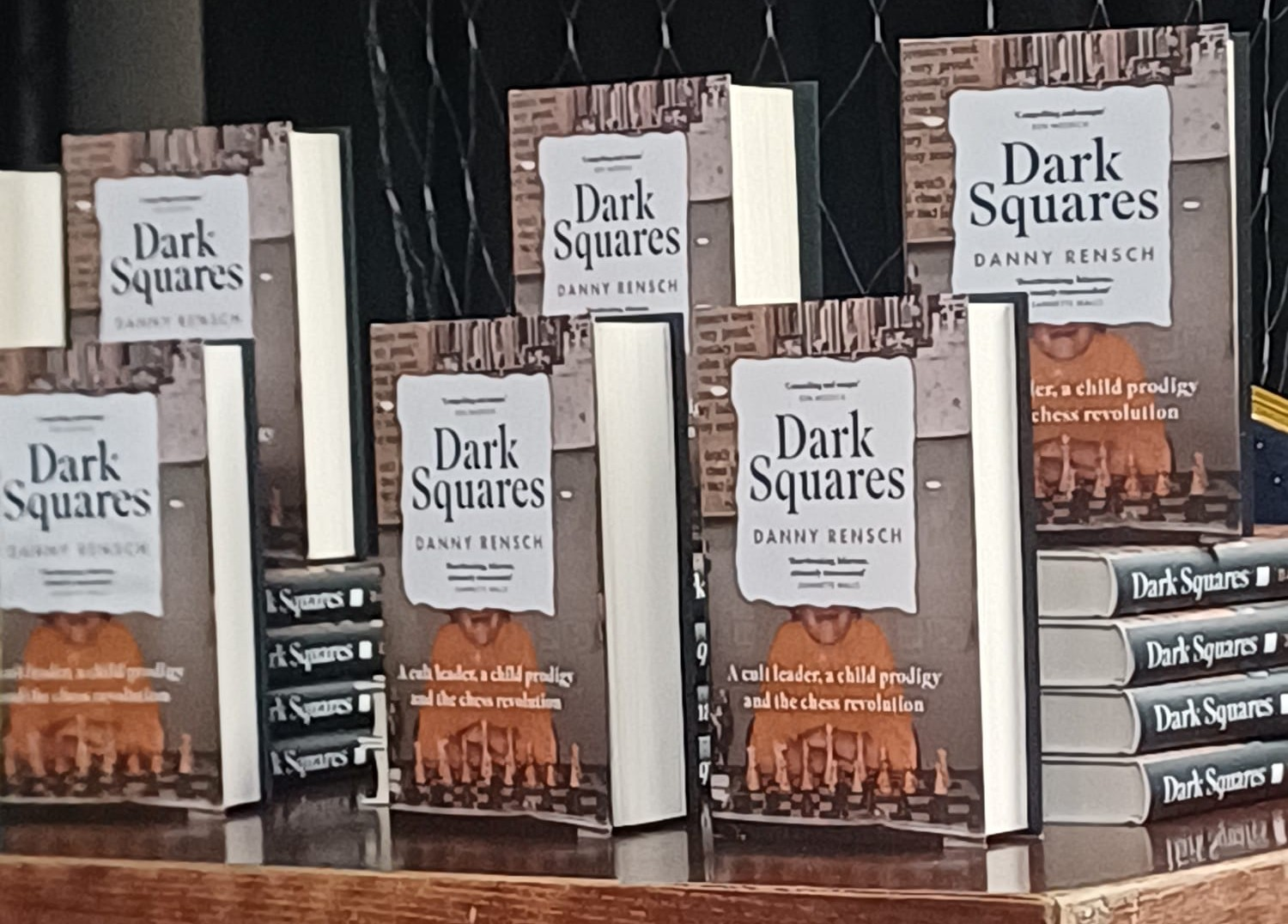
Which is why when Stephen Welch announced that on August 18 Battersea Chess Club would be hosting International Master and Chess.com patriarch Danny Rensch to promote his book, Dark Squares, I anticipated a sour sausage. Born in dysfunction under the auspices of the ‘Church of Immortal Consciousness’, a thankfully-dissolved Arizonan New Religious cult fronted by 15th century Englishman ‘Dr Pahlvon Duran’ fronted by 20th century 15th century Englishman spiritual conduit Trina Kamp – hmmm – Rensch’s precocious chess ability saw the church wield him as a guiding spiritual light, burning his childhood as fuel in the process. It is an extraordinary story and deeply sad. From this strange story would doubtless spring a man equally strange to match it, I assumed.
I had arrived early to the club to support Stephen in conferencing the space and horse-shoeing tables into a simultaneous shape. I then went with Stephen to meet Danny and his Chess.com marketing pal Chris. I grabbed a pint and awaited the grace of chess celebrity. They soon arrived, Stephen and I outstretched our hands as signal, Danny and Chris reciprocated.
Hand shaking commenced. I got Chris a Camden Helles, Danny had water. Sat circular with these men in the Falcon, I had the first inkling I may have been unfair to Danny. He obviously was happy to talk about chess and Chess.com and lé Paris Esports World Cup, but he also asked Stephen and I questions about ourselves, and seemed genuinely warm.

Danny eventually gets a half-pint (Stephen amusingly messed this up Danny wanted a full pint). My conversation with Danny largely concerned Dark Squares, which I embarrassingly explained I hadn’t read but planned to, and we talked about the process of writing. I asked if he had written it all, he said he had, with it coming in too long (so I’m inclined to believe him). He was thankful to his editors for finding the coherent narrative within his story. It is difficult when someone tells you a part of your story doesn’t matter for the purposes of a book, he said, because it is all of equal importance to him – it’s his life after all. That’s quite a vulnerable thing to share, but I imagine Danny still felt the benefit of those shredder-consigned words. There’s a salvific quality to writing oneself. Autobiography is as much a forgetting, a healing, as a remembering, a reliving.
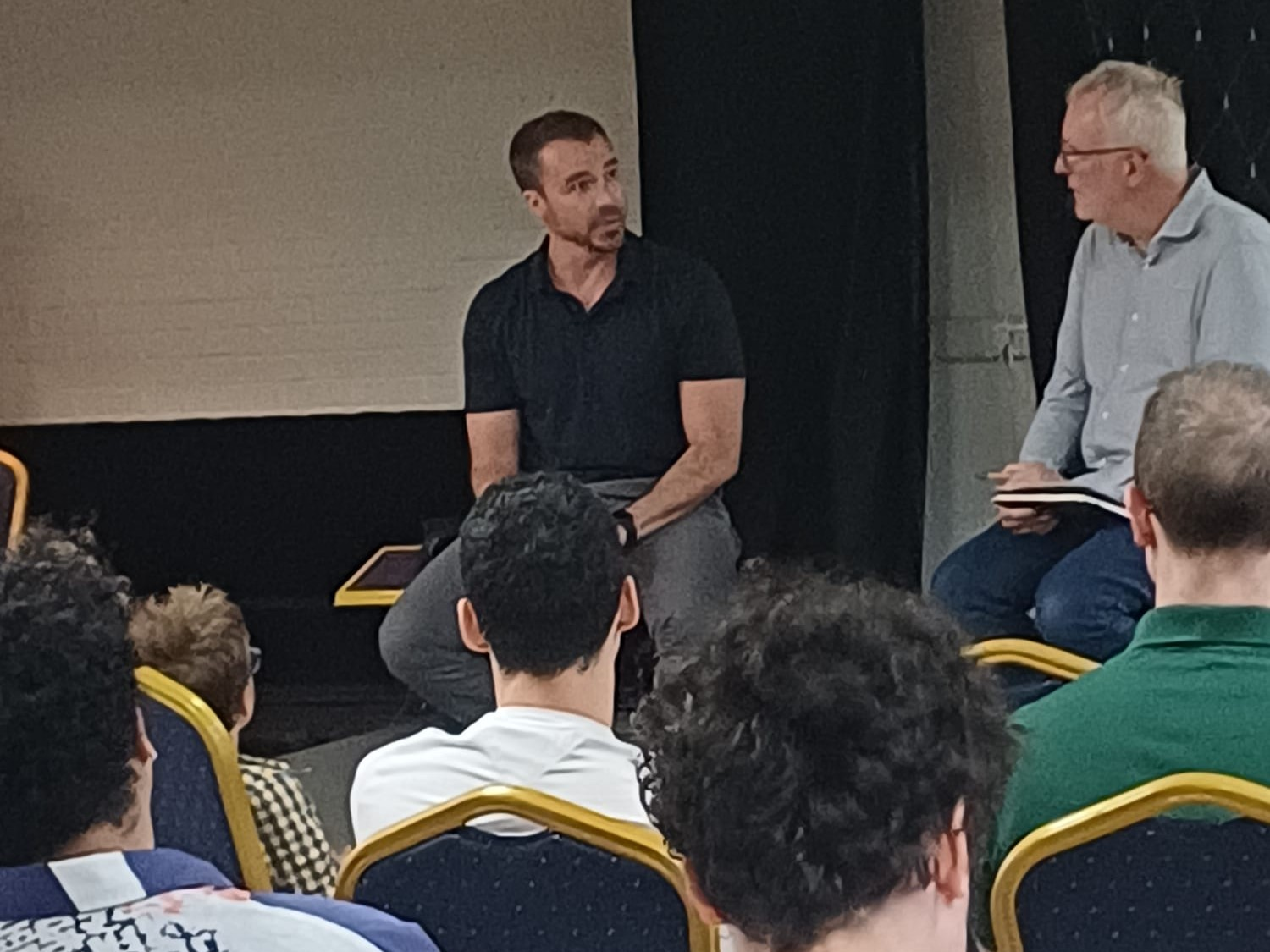
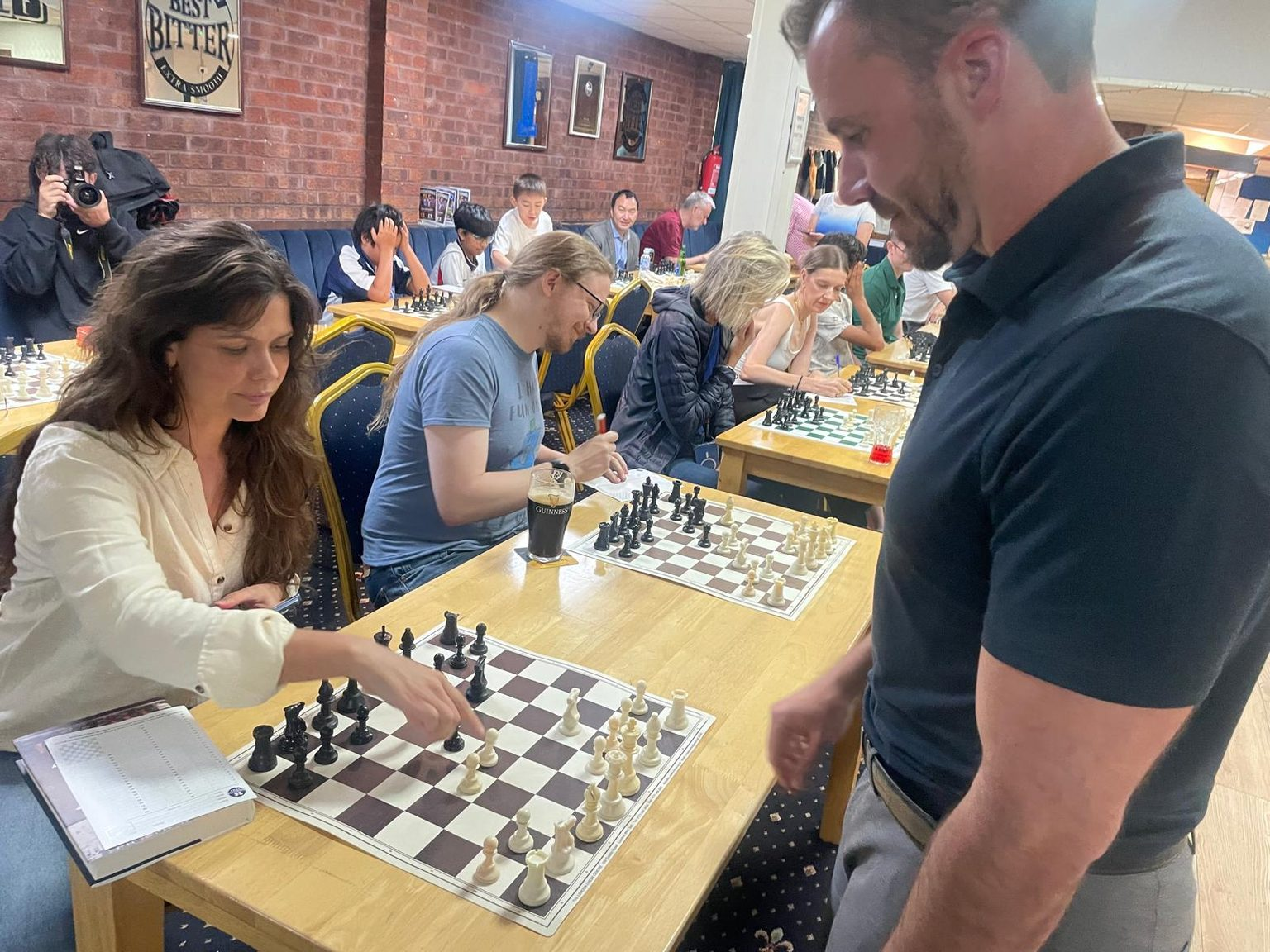
Once the Q&A was underway, his charisma shone through – it’s obvious why Danny is wheeled out by Chess.com when a bit of human communion is required. He spoke on several subjects: favourite players, how to improve, anal beads, all standard 2026 chess faire. He managed to turn many topics to hope or optimism for the future. He has the ability – I suspect borne of much well-deserved therapy – to connect with people though vulnerabilities turned to strength. He frequently turned putatively emasculating qualities (crying, doubt, powerlessness) into moments of learning, resilience, or self-growth. I was several times inspired. He seemed emotionally intelligent and an excellent public speaker. He then gave a gruelling simultaneous exhibition. 28 boards I think, with multiple 2000+ers in the mix. He won nearly all of them, though Chris Rawlinson got the better of him (game below!). Danny has clearly played chess before.
I suspect some darkness still remains. Understandable, and for which I think Danny should be forgiven. There’s a slightly frenetic, no, fervent rhythm to his chat about chess and Chess.com. Passion outstripping articulation, perhaps; no chess-player sleeps well, they say. An uneasy energy comes over him when chess or its business is on the table, he errs more towards the sermon, becomes more animated, a little more ‘unreal-looking’. I will not have been the first to feel a little of the cult-leader in Danny. Thankfully, it seems that Danny is happy to teach and share the passion for chess that would ultimately redeem him, and to not partake in the dominating or manipulative behaviours upon which cult leaders will always depend. A high road out of hell.
I should say that if Danny’s story lands, it will be a hit-you-with-your-clothes-on-leave-you-butt-naked tear-jerking, heart-stealing, big bucks Hollywood bonanza. I make no exaggeration when I say Rensch’s story has everything the Queen’s Gambit has and more. You could imagine Anya Taylor-Joy, with her 250 degrees of vision, cementing herself as screen-queen of chess as Danny’s mother, Deborah Lynn Sampson, or maybe even cult matriarch Trina Kamp. I did ask who Danny felt would play him in Dark Squares. He wouldn’t say; the wisest answer.